










By Jonathan McLeod*
Papua is Indonesia’s poorest and least populated region, but, as they say, rich in natural resources.

It is developing quickly in the era of pemekaran, an Indonesian word that literally translates as “blossoming,” or “subdivision”. It describes the rapid proliferation of local government institutions that is happening throughout Indonesia, penetrating regions that just a decade ago were totally bereft of infrastructure or public services (McWilliam 2011).
Even in the few months that I have spent researching in the district of Tambrauw, on the Bird’s Head of New Guinea, I’ve watched the pipes being laid and the roads being built, slowly reaching out from the main coastal town to the mountainous interior. Throughout the rural regions of Papua, development and pemekaran are more or less synonymous, people seem to want it, and it’s happening quickly.
Whereas in the Suharto Era, or the New Order, economic progress and indigenous culture were considered mutually exclusive, Papuans are increasingly empowered to document and formalize indigenous rights, especially after a landmark legal decision in 2013 (The Constitutional Court of the Republic of Indonesia 2013).
Throughout Indonesia, regional and local governments are launching initiatives to incorporate customary land rights and local traditions, or adat, into policy and governance frameworks. Rather than this being a merely technical problem, it means there is a simultaneous push to “develop”, and yet also to revive adat and embrace cultural identity (Davidson and Henley 2007).
For decades in Kalimantan and Sumatra, massive deforestation and the disenfranchisement of indigenous peoples have gone hand in hand. So far Papua has mostly avoided a similar fate, but there is also no clear alternative model Papuans are following.
Sustainable development pathways like carbon credit trading and ecotourism are frequently discussed, but mostly still just a vision. Ambivalence ensues, but also the possibility of something new.
Inviting the state in
As autonomous as many of the tribes of the Bird’s Head still are, rarely do we see an effort to evade the state (Scott 2009). Rather, people are eager to create a more “Papuan” one (Slama and Munro 2015).
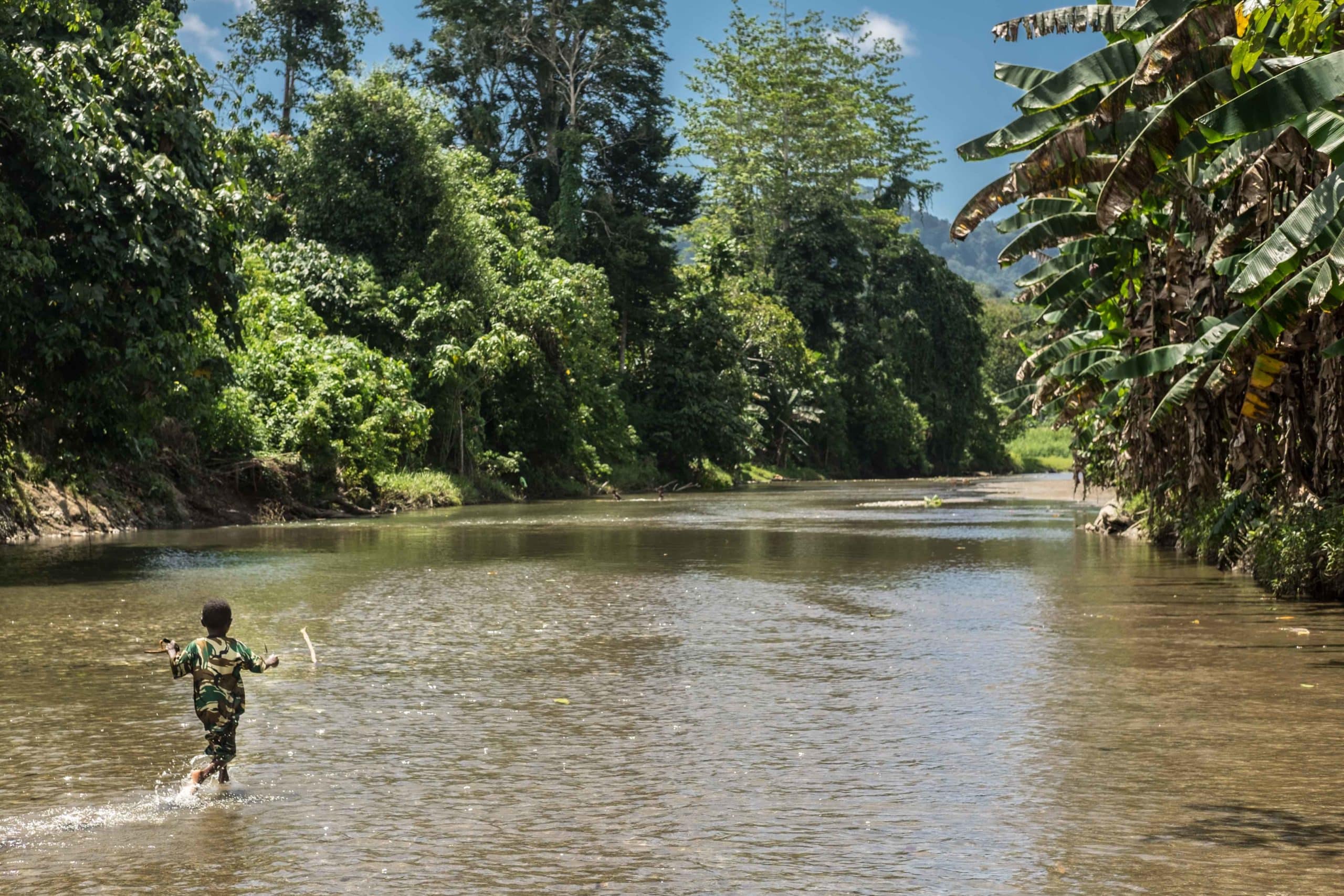
In Tambrauw, many villages nestled in the rugged forest terrain take days to reach by foot from the nearest dirt road or river. People in such places eagerly anticipate the arrival of infrastructure, yet also want to protect their forests from exploitation.
Parents send their children to the closest town or the port city of Sorong for schooling, where they live with relatives or in boarding houses. Or the whole family simply moves. Social and cultural changes accelerate as the next generation grows up in a bustling urban environment, increasingly reluctant to pulang kampung, or return to the village.
The main way that adat is transmitted in this region of West Papua is through traditional education or initiation, where boys or young men live in the forest for years at a time with a teacher, learning skills such as how to hunt, use plant-based medicine, perform rituals, and practice wuon, or sorcery.
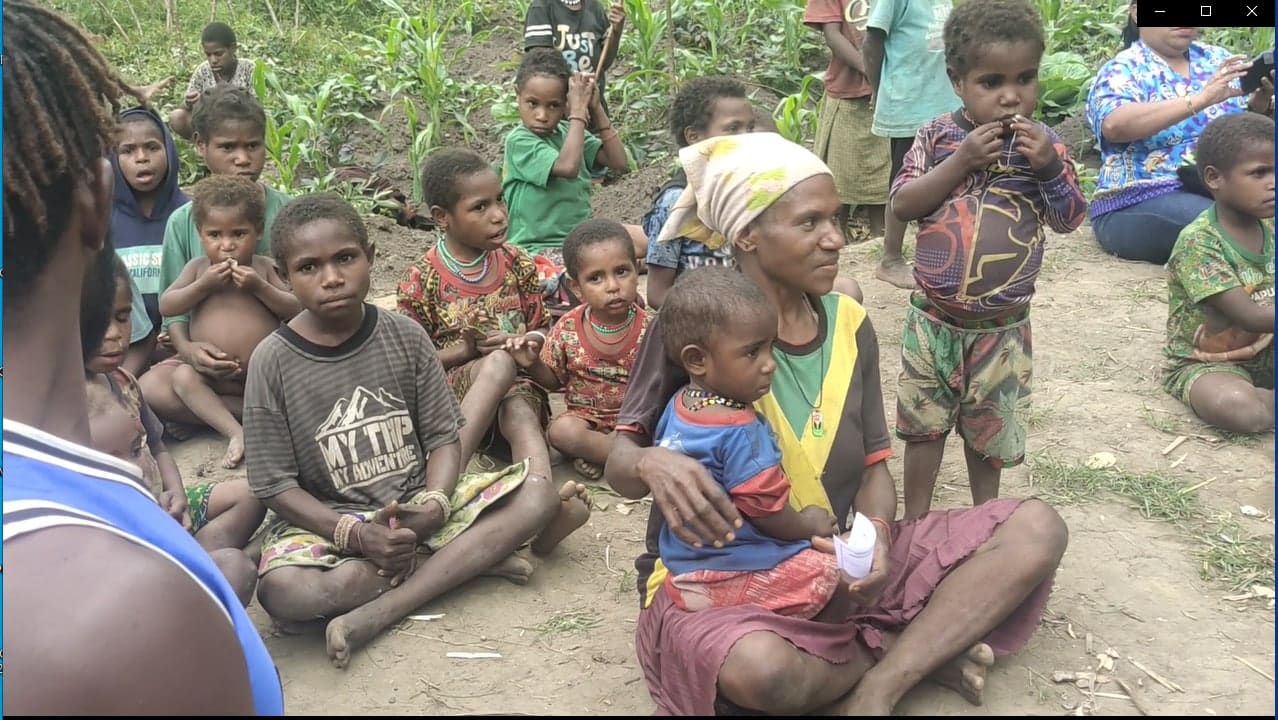
Nowadays only a small minority of the boys in Tambrauw receive this education (there is a similar, though much shorter equivalent education for women). Most people seem to lament this fact, even as they readily embrace modern education, a cash economy, and consumer goods. It appears very difficult to combine the two, even though the core of their cultural identity – as they describe it – is on the verge of disappearing.
Beside goods and services, roads bring what people refer to as pengaruh, or “influences.” Down the river and in the coastal communities, school children are considered more nakal, or naughty. Young men more commonly drink heavily, and fight. In general people feel less safe, and lament the disruption of calm, traditional village life, and the loss of adat.
There seems to be no guide and little established discourse on how to reconcile the gains and losses in the push to modernize.
Shortly after I moved to Syukwes, a small Abun village that is accessible only by river or on foot, the men starting building fences. In the older part of the village there is a cluster of traditionally built homes, with bamboo walls and sago palm roofs.
But the most visible manifestation of pemekaran in the interior is the recent construction of “permanent” houses – a standardized design using sawmilled wood, corrugated iron roofs, and oriented to face the “road”, which is now just a grassy lane.
Why was it so important to build the fences?, I wondered, and asked. They are primarily aesthetic, and do nothing to keep animals or people out of their yards. But they do neatly define boundaries and, along with the new houses, make Syukwes look a little more like a coastal town than a forest village.
One of the men told me: it’s to prepare for the asphalt road (which could be years away for arriving), and that “it will be easier for the government to inspect us.” This is a striking statement, considering how independent and egalitarian Abun people are in their daily lives, even compared to the other ethnic groups in the region.
As much as Abun value their cultural identity, autonomy, and the peacefulness of village life, they also enjoy the order modernity seems to promise, both in terms of services and, for a lack of a better word, the aesthetics.
Mapping tradition
Many outsiders with resources – particularly sophisticated conservation NGO’s backed by global climate change funding – are encouraging and empowering people to embrace, document, and legally encode their traditions, which are now admired and considered an asset.
This is complicating both the future of development in the region as well as the evolution of Papuan identity. Currently the most concrete and technical outcome of the indigenous rights movement is the mapping of customary lands. This entails clan meetings where community members discuss and draw boundaries for clan territories and also the location of sacred places; once agreed upon, the territory is mapped with GPS units and later uploaded to a national database that eventually, it is hoped, the government will formally recognize in the course of development planning.
The mapping of customary land, as well as the recognition of an official clan leadership structure, is a new and much more systematic way of thinking about land, power, and social relationships in general. Land rights – such as the building of a new house, clearing a forest garden, or hunting – is based on clan affiliation, but permission and actual use is informal.
At times it seems to me as if all roughly 4,000 Abun people are related in some way or another, and through their wide social networks (that also connect through marriage to adjacent tribes) people can ask a relative’s permission to enter and use an area of forest, even if they are not part of the same clan. Moreover, clan leadership until very recently has been unclear and weak, and tribal leadership essentially non-existent.
Abun traditionally live in small settlements, until at least World War II primarily in clusters smaller than what we would call a village (the word for “village” in Abun, as in many places in Papua, is borrowed from Indonesian), and they still frequently move about the landscape.
Men head out alone into the forest or travel to nearby relatives for weeks at time, often alone, unannounced, and simply because they feel like a change of scenery. My sense from talking to people is that many Abun enjoy the experience of the city, of traditional village life, and the quietude of the forest, so they simply move back and forth when they miss the benefits of one over the others.
It’s not difficult to imagine that a process of territorialization, with the precision of a GIS system and the power of nationally recognized laws, will change this dynamic, and the landscape itself. Nevertheless, people want security of land access in the face of social conflict, and the constant development pressure by the Indonesian government and outside business interests which have literally torn apart other regions of the country.
In other words, they are embracing the technological conversion of adat as the most promising way to both modernize and protect their land rights.(*)
*Jonathan is a PhD candidate in the School of Anthropology at the University of Arizona, and currently conducting fieldwork in West Papua, Indonesia on indigenous land rights and sustainable development planning.
Source: blog.castac.org