











By Kylie McKenna
Jayapura, Jubi – BP is trialing new approaches to security at a major gas site in the Indonesian province. It provides an important opportunity for human rights protection at a potential conflict site. But will it work and can multinational companies be trusted to protect locals?

Indonesia’s handling of human rights has led it to be considered ‘one of three countries (along with Colombia and Nigeria) in which human rights in the corporate sphere are most obviously endangered’ (see Chris Ballard’s, Human rights and the mining sector in Indonesia).
This is especially true in West Papua where there is ongoing allegations of torture, forced disappearances, extra-judicial killings and the application of treason and blasphemy laws to limit freedom of expression.
Human rights violations have been of particular concern in areas surrounding Freeport-McMoRan’s Grasberg mining complex. With a financial interest in maintaining a presence at Grasberg, the Indonesian military has been accused of orchestrating numerous shooting incidents in the area, and then blaming the attacks on Papuan separatists.
Those who link the shootings to the military claim they are an attempt to demonstrate the military’s importance to Freeport in order to secure on-going security payments. These shootings, along with other violent incidents, have raised concerns as to whether it is possible for multinational corporations (MNCs) to invest in West Papua, while maintaining a commitment to human rights.
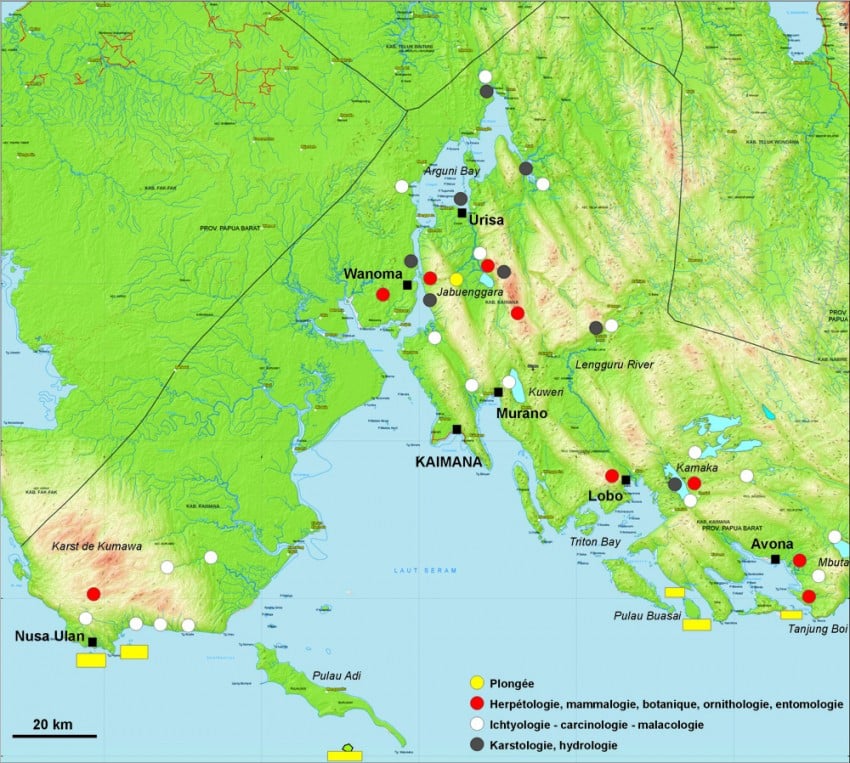
One such company is BP, which entered West Papua in 2005 as the operator of the Tangguh Liquefied Natural Gas (LNG) project. While geographically distant from the Grasberg mining complex, BP acknowledged that security would be the most difficult and sensitive issue it would face in its Tangguh operations.
As with Freeport, BP is required to subsidise public security expenses mandated by the government. Payments made by BP in direct support of Tangguh security in 2012 amounted to more than US $69,000. But as an alternative to exclusively relying upon the Indonesian security forces, the company has implemented its own Integrated Community Based Security (ICBS) strategy.
ICBS came in response to recommendations by international human rights consultants that BP should limit the deployment of security personnel in the vicinity of the Tangguh project.
The strategy is based on a model of community policing that had never been used for security at a major extractive site.
BP has made three specific commitments as part of its ICBS strategy. First, the use of an unarmed ‘inner ring’ of Papuans, many from the local area, for everyday security of the project. Second, a commitment to only call the police, not the military, and only if a security problem escalates.
And third, the provision of human rights training (including the Voluntary Principles on Security and Human Rights, or VPs, and UN Basic Principles on the Use of Force) for ICBS, police and military personnel who would be called in if a security incident were to intensify.
BP has received both praise and suspicion for its security approach in West Papua.
Internationally, it is cited as an example of ‘innovation’ in conflict sensitive business practice. ICBS has also attracted recommendation within Indonesia, with claims by one report that ‘security officials are encouraging other companies to adopt similar security models’.
On the other hand, the same report suggests ‘there is little familiarity’ with the ICBS system at the national level, but ‘there is relief that it seems to be working effectively and that no security or human rights issues have developed at Tangguh’.
While the report goes on to note that ‘no political violence, separatist inspired or otherwise’ has occurred at Tangguh, BP has faced similar problems to Freeport. One of the biggest risks the company has faced in its implementation of ICBS is that Indonesian security forces might orchestrate attacks similar to the shooting incidents around Freeport.
Indonesian military agents were suspected of provoking violence even prior to the construction of Tangguh in ‘an unconventional bid for a lucrative “protection” contract’ (Kirksey, 2009: 150-1).
Kirksey and Grimston (2003) also claim that while BP has sought to cut the military out of a security deal, ‘the company is using officers from the country’s feared Mobile Police Brigade (Brimob) — which has also been accused of numerous human rights abuses’.
Further, even though ICBS has been well received by some Papuan NGO workers and religious leaders, not all Papuans are convinced about community security.
As one Papuan religious leader told me in an interview:
I am still so pessimistic about this because they are contractors for the government. There must be government responsibility inside to protect – there must be army or policemen inside even if not in uniform.
Overall, BP’s ICBS strategy in West Papua suggests that international business and human rights initiatives might open valuable opportunities for MNCs to contribute to security sector reform in their areas of operation.
Before promoting ICBS as a ‘model program’ however, it is crucial that more research be conducted into how successful this strategy actually is; how it works; how it relates to non-security related human rights concerns (eg discrimination); and how BP’s ability to implement ICBS might reflect on broader changes within the political economies of West Papua and Indonesia.
Of particular concern is that much of the available information on ICBS has been written by BP’s Tangguh Independent Advisory Panel (TIAP) whose independence and inclusivity has been questioned (Hickman and Barber, 2011, p 15).
If, in fact, BP is deemed to have successfully avoided human rights violations after 10 years of operations in West Papua, ICBS might offer important lessons on human rights protection at other extractive sites, both within Indonesia and internationally.
Dr Kylie McKenna is a research fellow at the State, Society and Governance in Melanesia program in the ANU Coral Bell School of Asia Pacific Affairs. She recently authored a major study on corporate social responsibility and natural resource conflict.
References
Ballard, C. 2001. Human Rights and the Mining Sector in Indonesia: A Baseline Study.
Hickman , A. & Barber , P. 2011. Tangguh, BP & international standards: An analysis
of the commitments made by BP in relation to BP Tangguh in West Papua and their
social and environmental responsibilities.
Kirksey, E. 2009. “Don’t Use Your Data as a Pillow”. In A. Waterston & M.D Vesperi (eds). Anthropology Off the Shelf: Anthropologists on Writing. West Sussex: Wiley-Blackwell, 150-1.
Kirksey, E. & Grimston, J. 20/7/2003. ‘Indonesian Troops for BP Gas Project’.
TIAP 2014. First report on operations and proposed expansion of the Tangguh LNG project.