









Jayapura, Jubi – Birds in the Land of Papua are extraordinarily rich. They are highly diverse and unique in several respects, with 852 species documented so far. From Papua New Guinea (PNG) to the Land of Papua in Indonesia, there is a vast number of important bird species. There are 717 recorded bird species, including 602 species of ground-nesting birds, and 2,029 endemic bird species.
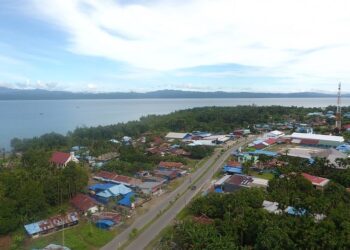
Cassowary Island is a small island on a river located in Western Province, Papua New Guinea. This island lies within the lagoon area along the Fly River. This remote island has an elevation of about 1 to 6 meters above sea level and experiences a wet tropical climate.
“The cassowary is a wingless bird — that is, unable to fly (Cassuarius) — a species of the largest animal that walks beneath the dense canopy of the tropical forests in the Land of Papua,” said Ronald G. Petocz in his book titled Nature Conservation and Development in Irian Jaya (present-day Papua).

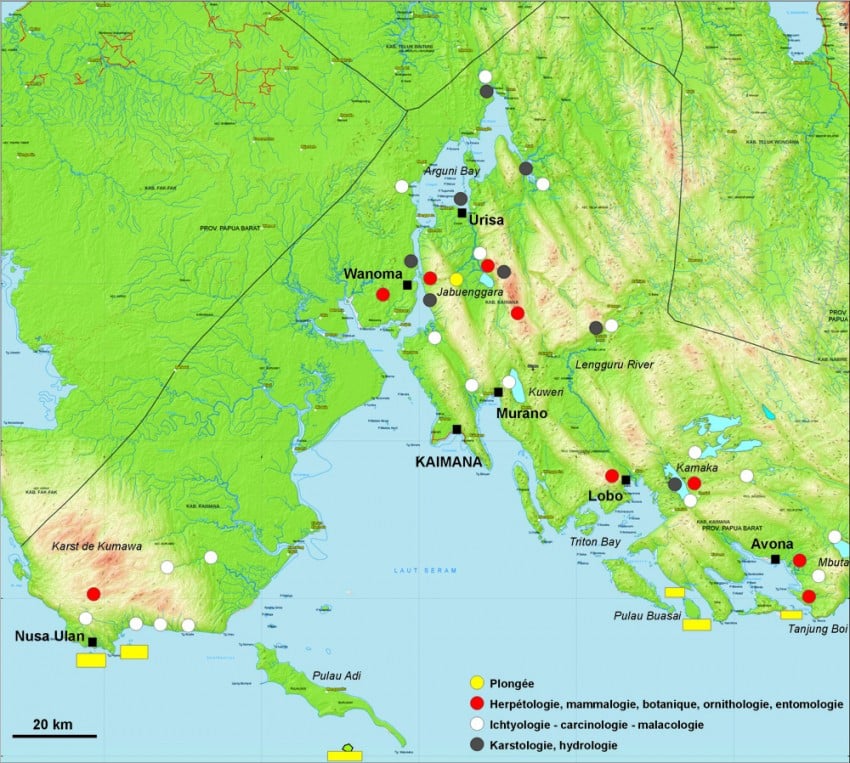
It is further explained that this creature is the largest animal living naturally in the Land of Papua. However, this wingless bird is native to the tropical forests of Papua New Guinea (the Land of Papua and Papua New Guinea), Maluku (Seram and Aru Islands), and northeastern Australia.
The life of the cassowary is currently under threat as well, following the presence of Forest Concession (HPH) companies through to National Strategic Projects (PSN).
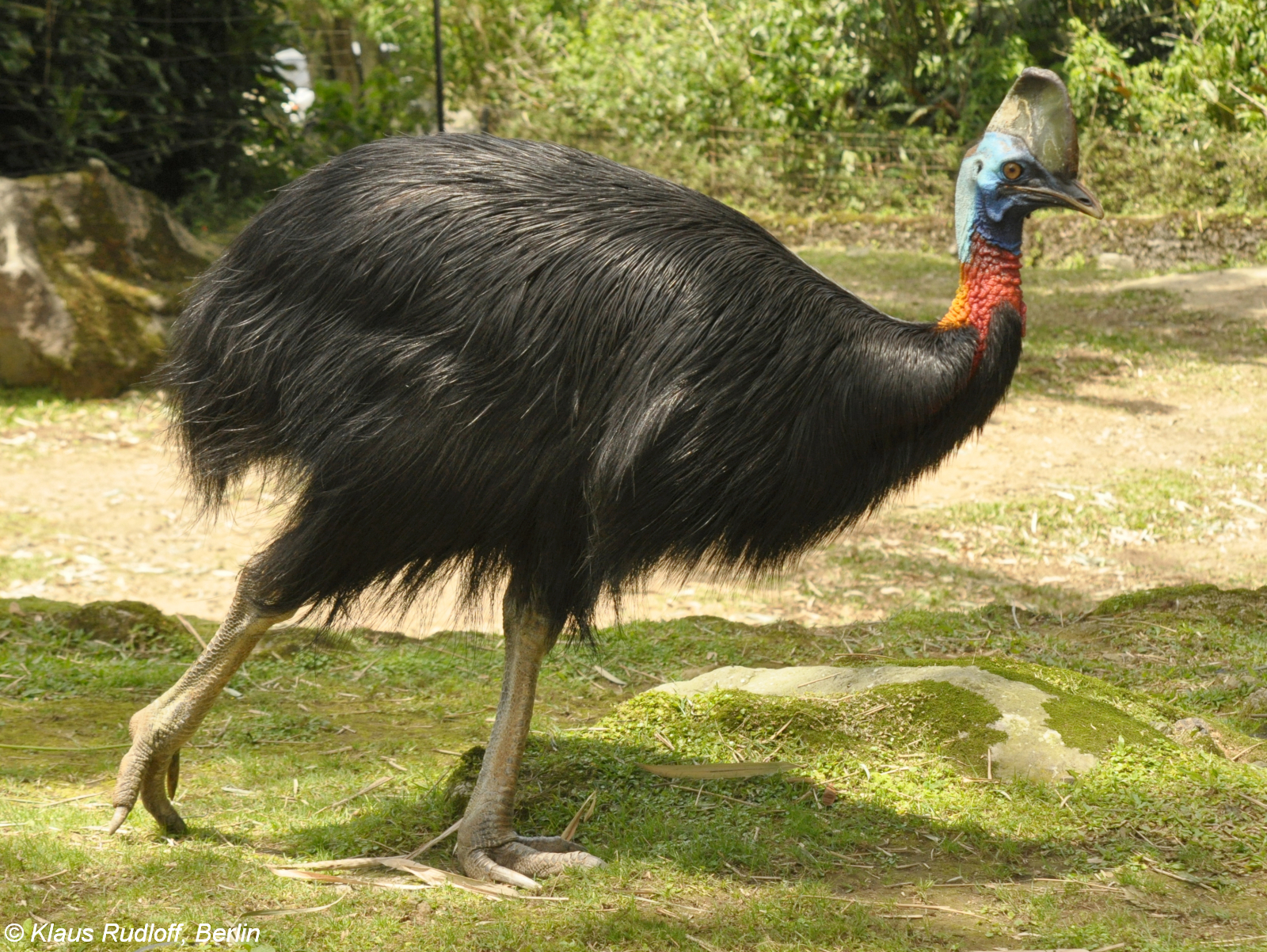
Cassowaries lose their food sources and living space as tropical forests in the Land of Papua disappear. Although cassowaries do not nest in trees, they are the primary foragers of fallen fruit when the season arrives.
Back in the 1990s, a Jubi journalist met with members of the Masita tribe in Kaureh District, Jayapura Regency, Papua Province. At the time, they explained that when the matoa fruit season arrived, hunters would begin searching for game in the form of cassowary and wild boar meat. They even offered mambruk bird meat at the time.
When the matoa fruit begins to ripen, it is certain that cassowaries, lories, cockatoos, bats, and wild boars begin to feast on the matoa fruit.
Only cassowaries and wild boars scavenge the leftover fruit that falls beneath the trees, and that is when hunters begin taking action, hunting their catch with bows and arrows.
Unfortunately, the hunters have lost their hunting grounds as their customary forests have been converted into oil palm plantations in the Juk Valley, Kaureh District, up to the present day. Cassowaries have lost their food and their nesting grounds beneath the trees.
In tropical rainforests along the equator, if large mammals such as elephants or rhinoceroses typically act as the primary architects of forest ecosystems—dispersing seeds, shaping landscapes, and maintaining the balance of the food chain—in the Land of Papua, that role is taken on by the cassowary.
Ornithologists classify cassowaries in the Land of Papua into three types: the northern, southern, and dwarf cassowary.
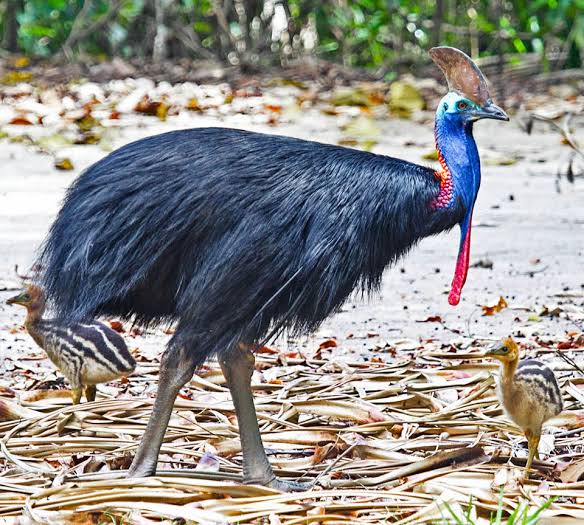
In Latin, it is noted that the northern cassowary (Casuarius unappendiculatus) and the dwarf cassowary (Casuarius bennetti) live in the same forests, in exactly the same locations. Yet these cassowary species almost never encounter one another.
Native Indonesian birds still survive to this day: the Southern Cassowary, the Northern Cassowary, and the Dwarf Cassowary can still be found in the tropical rainforests and coastal swamps of the islands of eastern Indonesia, particularly on the island of Papua New Guinea (the Papua and West Papua regions) and surrounding islands such as Seram and the Aru Islands.
In the swamp and savanna areas of South Papua, cassowaries are threatened by the loss of 2.5 million hectares of swamp forest (eucalyptus) converted into plantations, leaving cassowaries struggling to find whatever living space remains.
Unlike Papua, in Port Moresby, the capital of PNG, the Port Moresby National Papua Park has been built, where residents can directly observe all three cassowary species.
In addition, the PNG government and indigenous landowners are also developing conservation areas to attract investment in the global carbon trade.
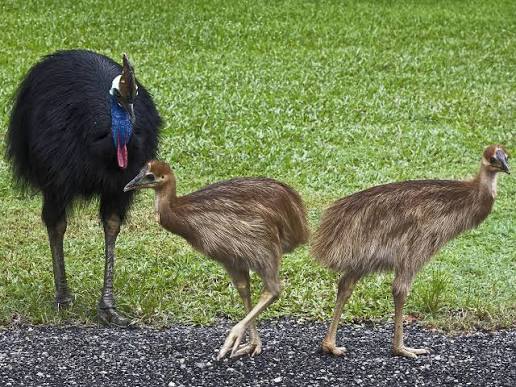
Male cassowaries incubate the eggs and raise the chicks. Female cassowaries are much larger in body size (weighing up to 58 kg) and have brighter coloring compared to male cassowaries (weighing 29–34 kg). Female cassowaries are polyandrous, meaning they have multiple male mates.
The female will leave the eggs after the mating season. The task of incubating and hatching the eggs is essentially the responsibility of the male cassowary. From incubating the eggs for three months to caring for the chicks until they are grown, all of this is the male cassowary’s duty.
The male cassowary takes full responsibility for incubating the eggs for 50–60 days and caring for the chicks until they become independent—that is, able to find their own food.
When mating season arrives, female cassowaries are usually more aggressive and will drive away males that do not interest them, and will crouch down when their mating urge peaks.
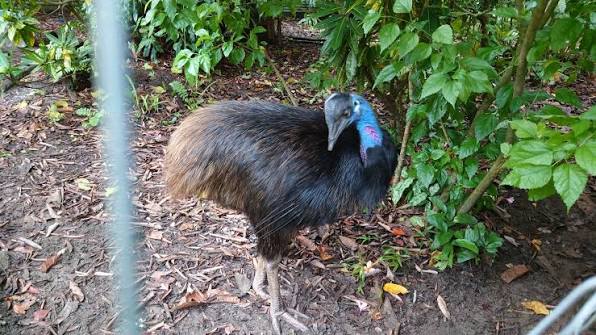
A female cassowary can lay two to four eggs, though some lay only a single egg. After laying her eggs, the female cassowary will leave to seek out another male mate.
Typically, the male cassowary will court or attract the female’s attention by pecking repeatedly at the ground nearby and following her.
The double-wattled cassowary is one of two bird genera within the family Casuariidae. This genus consists of three species of very large, flightless cassowary birds.
There are three cassowary species: the Single-Wattled Cassowary (Casuarius unappendiculatus), the Double-Wattled Cassowary (Casuarius casuarius), and the Dwarf Cassowary (Casuarius bennetti), also known respectively as the northern, southern, and dwarf cassowary.
In Latin, it is noted that the northern cassowary (Casuarius unappendiculatus) and the dwarf cassowary (Casuarius bennetti) live in the same forests, in exactly the same locations.
The distribution range of these three species is in the tropical forests and mountains of the island of Papua. The Double-Wattled Cassowary is the only cassowary species found in Australia.
The loss of tropical forests in the Land of Papua will threaten the lives of fauna and flora, including the cassowary.
Yet with this potential natural resource wealth of flora and fauna, it could become a major asset for attracting investment in the global carbon trade. (*)